Define the field
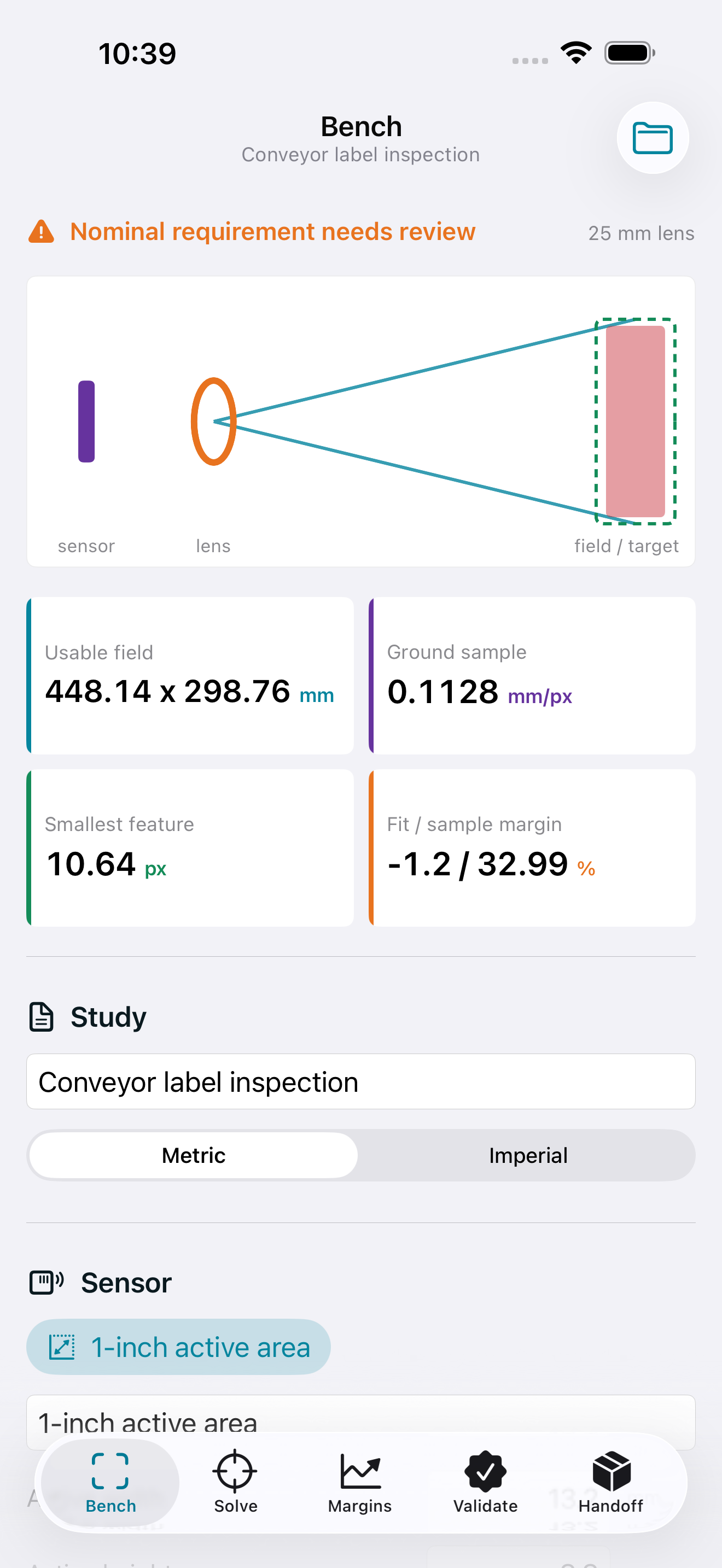
Enter the active sensor, resolution, target envelope, smallest feature, clearance, edge reserve, working distance, aperture, exposure, and motion.

Machine vision lens workspace
Solve the lens window. Stress the margins. Validate the field.
A practical optical workflow
Lensdatum keeps sensor geometry, production constraints, lens candidates, tolerance assumptions, field checks, and evidence in one local project.
Enter the active sensor, resolution, target envelope, smallest feature, clearance, edge reserve, working distance, aperture, exposure, and motion.
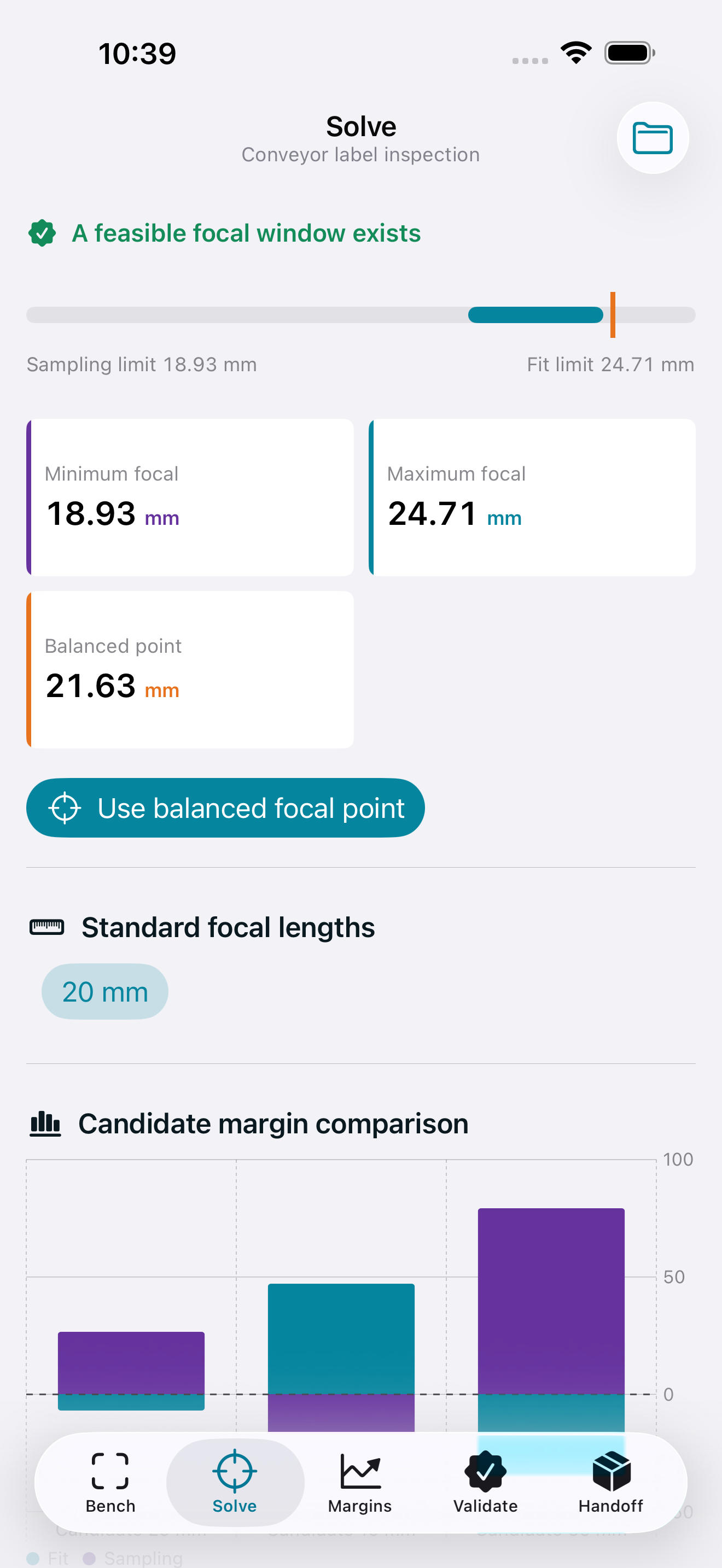
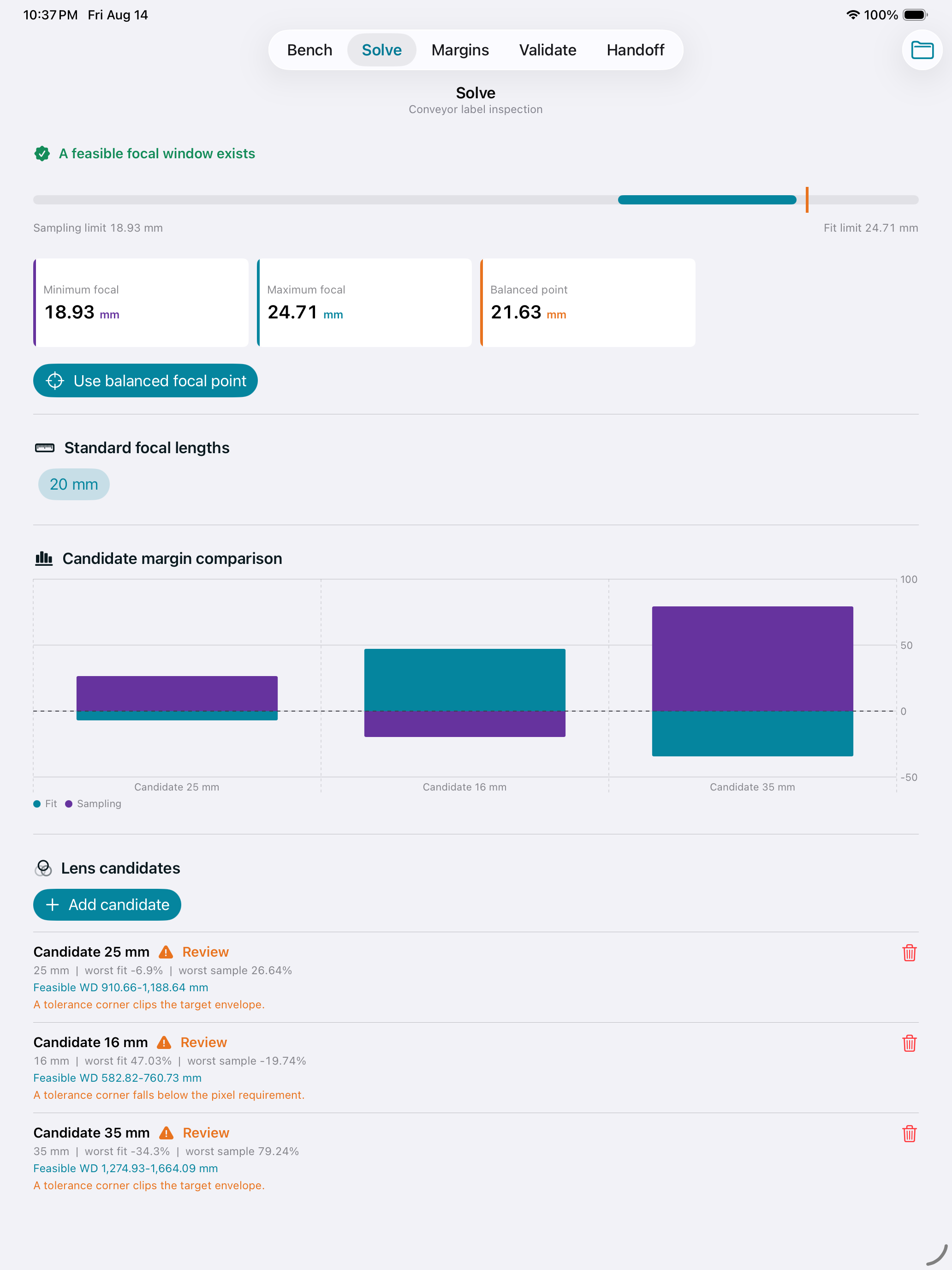
Find focal limits that satisfy target fit and pixel sampling, then review standard focal choices and a balanced starting point.
Rank supplier lenses by their worst focal, distance, and active-area tolerance corner, with distortion and minimum focus included.
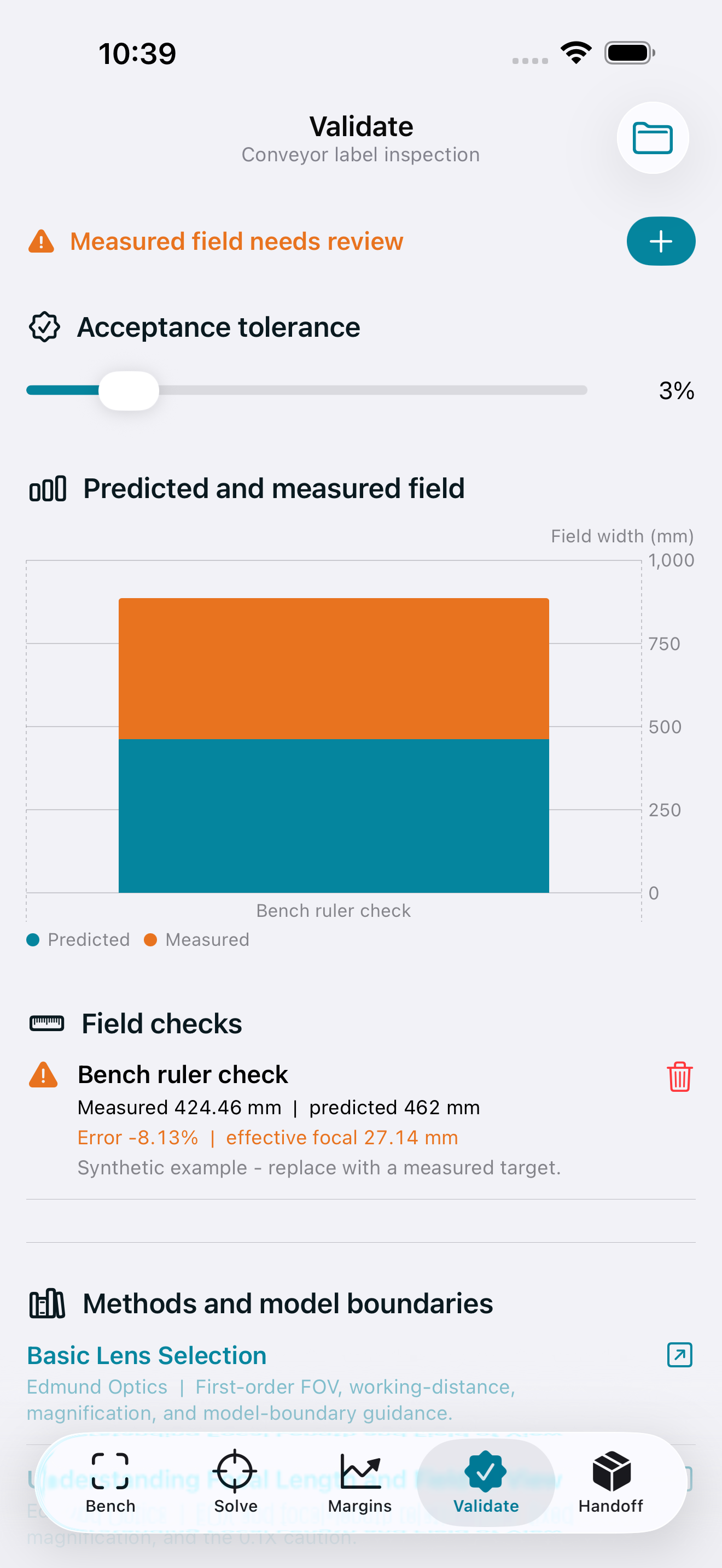
Measure a known span, compare it with the predicted width, recover effective focal length, and retain each field check.
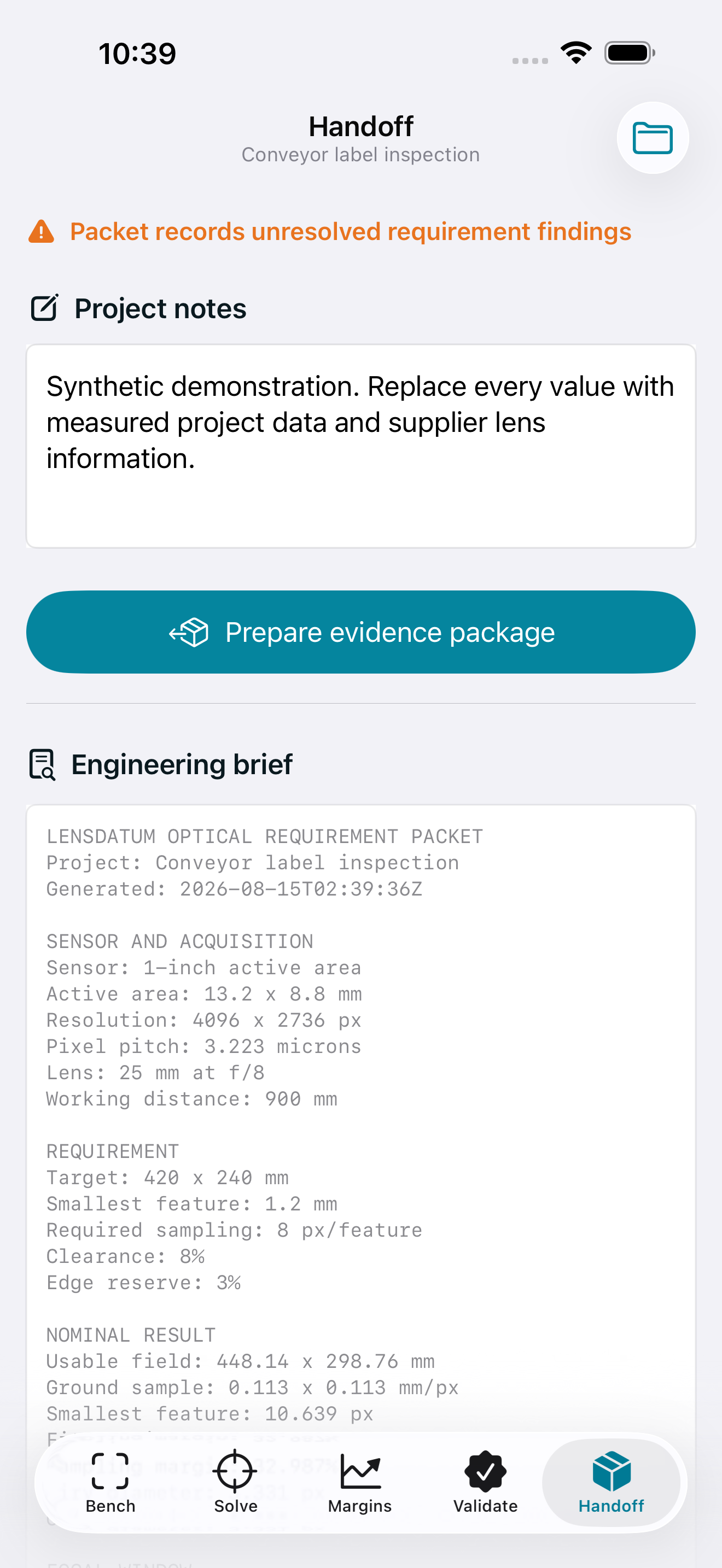
Current Build 4 interface
Margins before procurement
Focal sensitivity, diffraction, motion blur, depth of field, distortion reserve, minimum focus, and tolerance corners stay visible beside the requirement they affect.
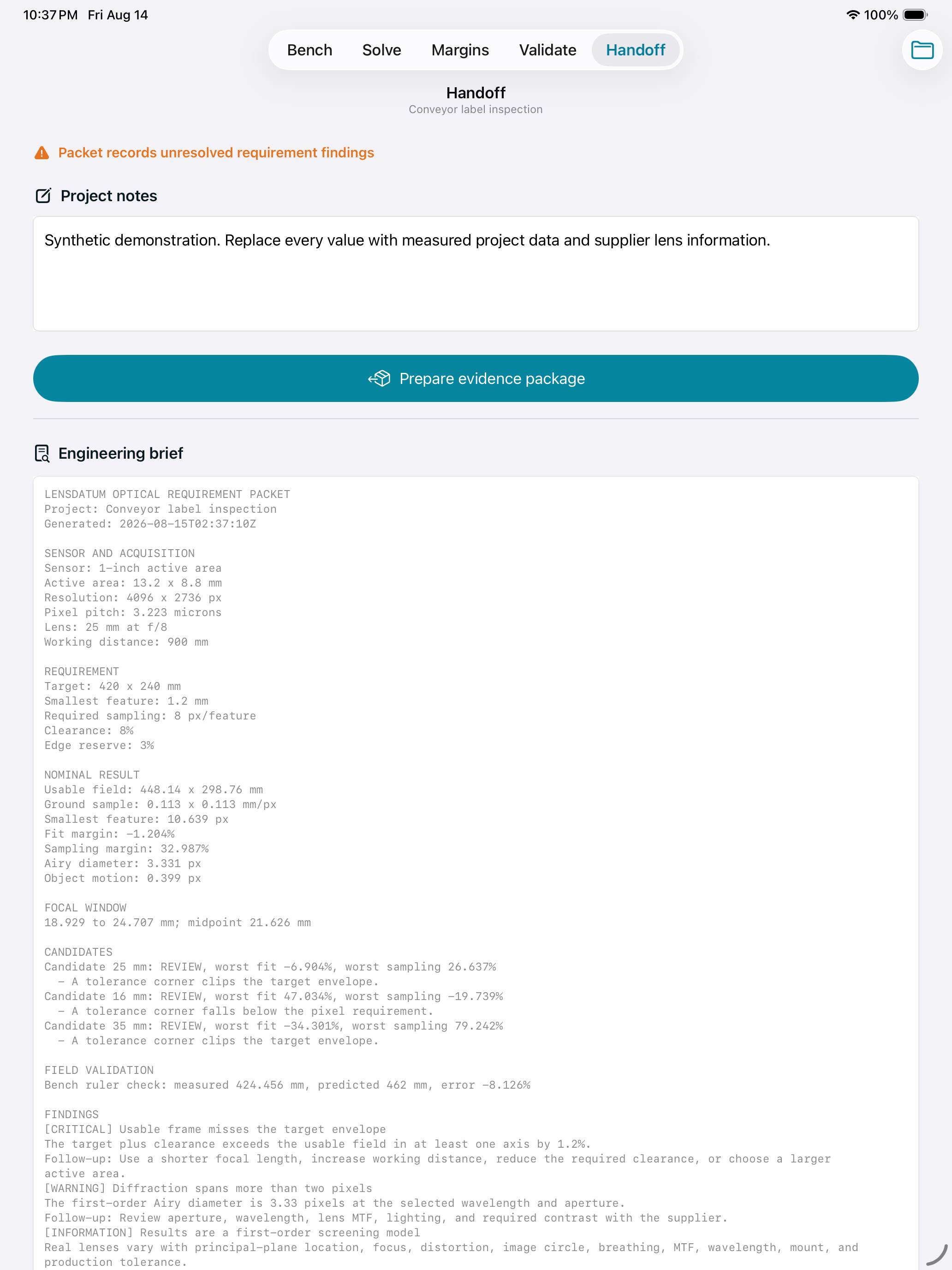
Portable evidence, generated offline
Bounded by design
Lensdatum does not certify a lens or replace supplier data, optical simulation, measured commissioning, or qualified engineering review. Real systems can vary with principal-plane location, distortion, focus breathing, image circle, MTF, mount, wavelength, lighting, and production tolerance.
The included project is labeled as a synthetic demonstration. Replace its values with measured project data and applicable supplier information.
Primary technical references